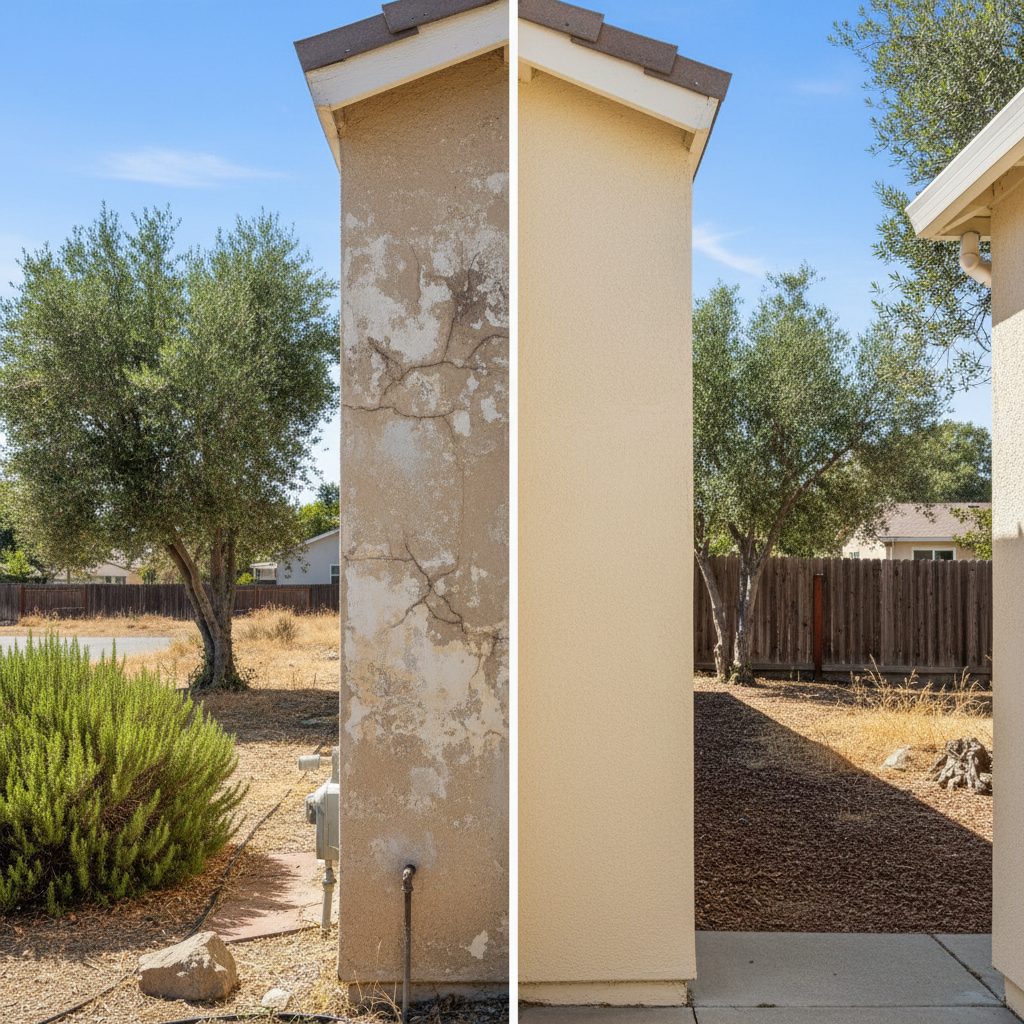
So, you're eyeing your stucco home here in Salinas and thinking it's time for a fresh coat of paint. Good call, really. A quality paint job doesn't just make your place look sharp; it's also a critical layer of protection for your stucco. But when you start digging into it, you'll quickly realize there's more than one way to paint stucco. For homeowners, the big debate usually comes down to two main types: a standard exterior acrylic paint or a specialized elastomeric coating. Let's break down what you need to know about both, shall we?
Standard Exterior Acrylic Paint: The One You Know
This is probably what pops into your head when someone says 'exterior paint.' It's a good, general-purpose paint, built to stand up to the elements. You can find it everywhere, it comes in a million colors, and most painters are very familiar with it.
Cost
Generally speaking, standard acrylic paint costs less per gallon than elastomeric coatings. This can make the upfront cost of your project a bit lower. Labor costs might also be slightly less because, frankly, it's often a quicker job to apply.
Durability & Protection
A good quality acrylic paint will protect your stucco from UV rays and general weathering. It'll resist fading and chalking pretty well, too. However, it's not made to bridge cracks. If your stucco has hairline cracks, or if new ones pop up after painting, that paint film isn't going to stretch with them. Those cracks will show right through, and water can eventually sneak in.
Maintenance
It's fairly easy to clean. Usually, you can just hose it down or gently scrub it if it gets dirty. Touch-ups are straightforward because matching colors and applying them is a breeze.
Appearance
Acrylic paints offer a huge range of finishes, everything from flat to satin to semi-gloss. You can get a very crisp, clean look. The downside is that if your stucco isn't perfectly smooth, or has minor imperfections, the paint won't do much to hide them.
Elastomeric Coatings: The Stucco Pro
Elastomeric paint isn't just paint; it's more like a thick, flexible membrane. It's specifically mixed for masonry surfaces like stucco, and it's designed to do a lot more than just look pretty.
Cost
You're going to pay more per gallon for elastomeric coating, no doubt about it. It's a premium product with specialized ingredients. Applying it can also take a bit longer, sometimes needing more specific prep or thicker coats, which means higher labor costs. So, the initial investment is definitely higher.
Durability & Protection
This is where elastomeric really shines. Its main feature is its elasticity. It can stretch up to 300-600% of its original size. What does that mean for your Salinas home? If your stucco develops hairline cracks – and let's be honest, with our temperature swings and sometimes shifting soils, it happens – the elastomeric coating will stretch right over them. This keeps a continuous, waterproof barrier intact. It's incredibly resistant to water penetration, which is a huge plus for protecting your stucco from moisture damage and stopping mold or mildew from growing underneath the surface. It also holds up exceptionally well to UV and weathering, by the way.
Maintenance
Like acrylic, it's easy to clean. The smooth, flexible surface often sheds dirt better, which is nice. However, if you need to do a touch-up, it can be a bit trickier to blend seamlessly because it's thicker. You really want to get a good, even application the first time around.
Appearance
Elastomeric coatings typically have a thicker, more uniform appearance. They can actually help to smooth out minor surface imperfections in your stucco, giving it a more refreshed, consistent look. Most come in a flat or low-sheen finish, which is generally preferred for stucco anyway.
Which One Should You Choose for Your Salinas Home?
Look, if your stucco is brand new, perfectly smooth, and you're on a really tight budget, a good quality standard exterior acrylic paint might get the job done for a few years. But honestly, I rarely recommend it for stucco unless those conditions are met, and even then, I'd say you're missing out on serious protection.
For most homeowners in Salinas, especially if your stucco is a few years old, has any existing hairline cracks, or you just want the best long-term protection and value, an elastomeric coating is the way to go. The initial higher cost is almost always offset by its superior durability, crack-bridging ability, and extended lifespan. You're not just painting; you're essentially putting a flexible, waterproof shield on your home.
Think about it: we get some pretty intense sun here, and while our winters aren't extreme, that moisture can still find its way into tiny cracks. Elastomeric paint is built to handle that. It's designed to protect your biggest investment from the elements for years longer than standard paint. We've seen it time and again at Salinas Stucco & Plastering – homes painted with elastomeric just hold up better, look better longer, and require less fuss down the road.
My advice? Invest in the elastomeric. You'll thank yourself in five or ten years when your stucco still looks great and you haven't had to worry about water intrusion or cracking paint. It's the smart choice for stucco here in the Central Coast.